01
Full grease path
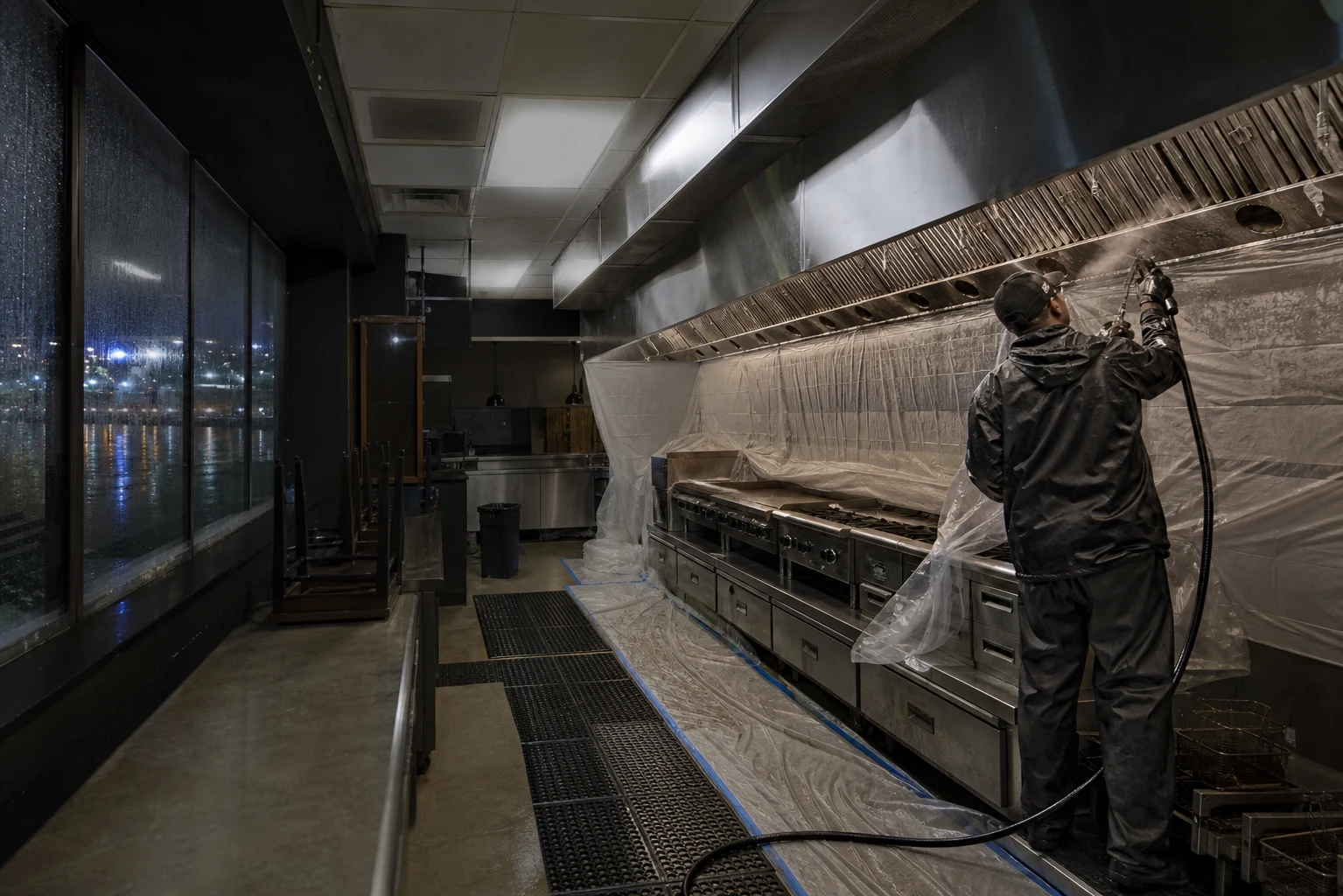
Restaurant hood cleaning
Clean the agreed accessible hood, plenum, duct and exhaust fan—not just the visible canopy.
Explore this service →Commercial kitchen exhaust help in Wilmington
Plan full-system grease removal, coastal-weather access and the closeout records your kitchen needs after the crew leaves.
What can we help with?
Commercial exhaust services
Every estimate should identify the connected components, safe access, protection, service window, reporting standard and exclusions.
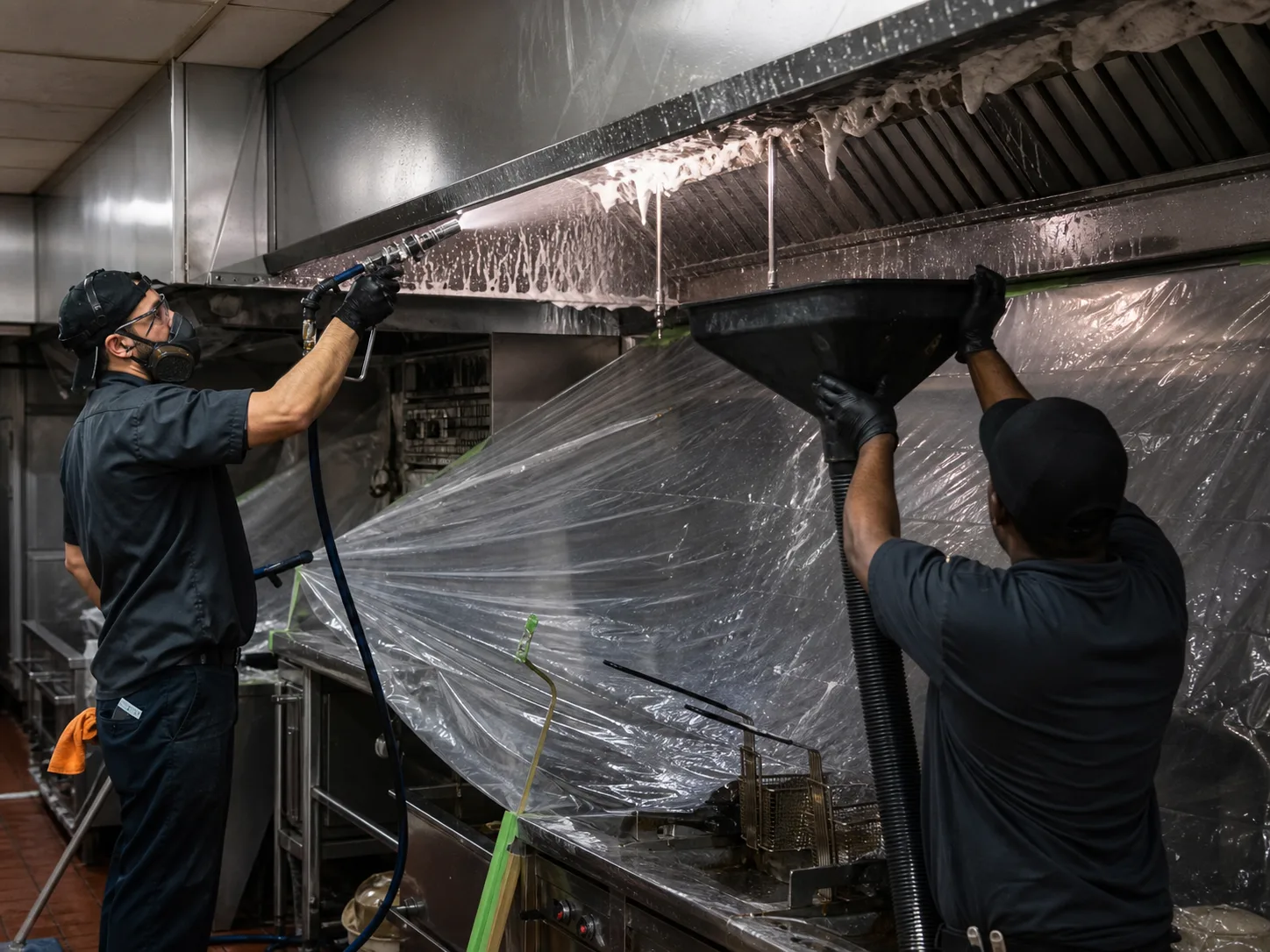
Full grease path
Clean the agreed accessible hood, plenum, duct and exhaust fan—not just the visible canopy.
Explore this service →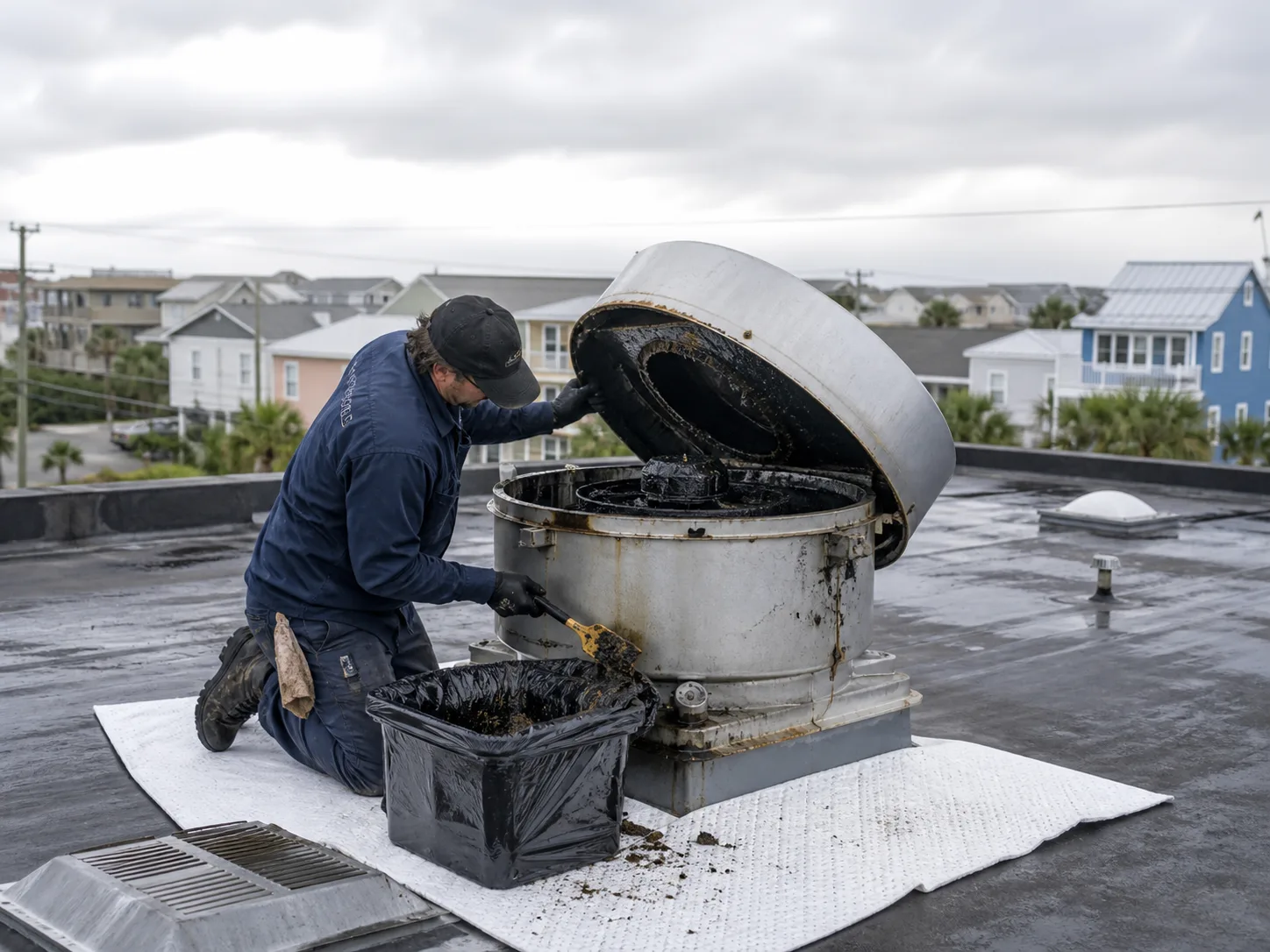
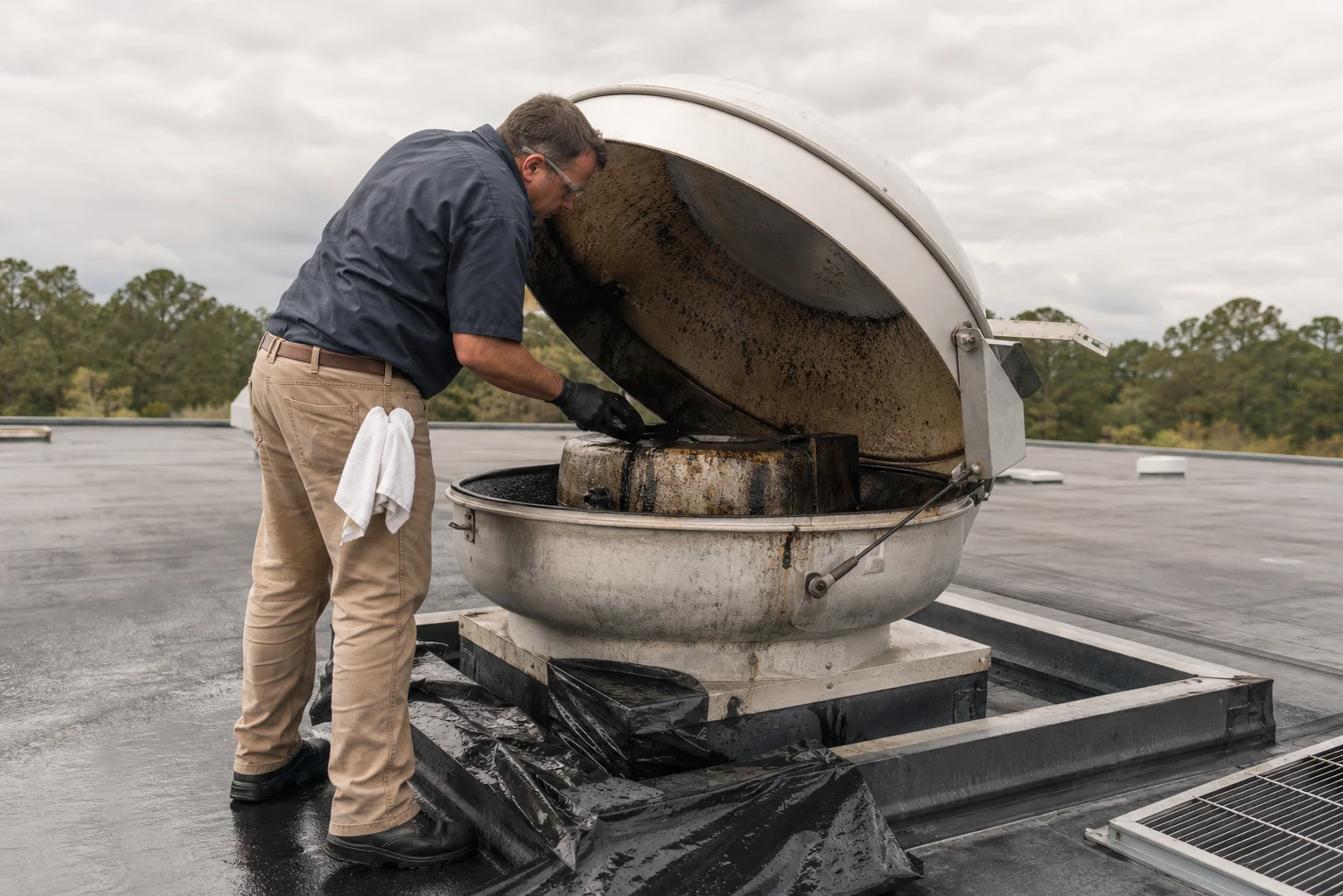
Rooftop scope
Plan safe fan access, grease containment and roof protection around coastal weather conditions.
Explore this service →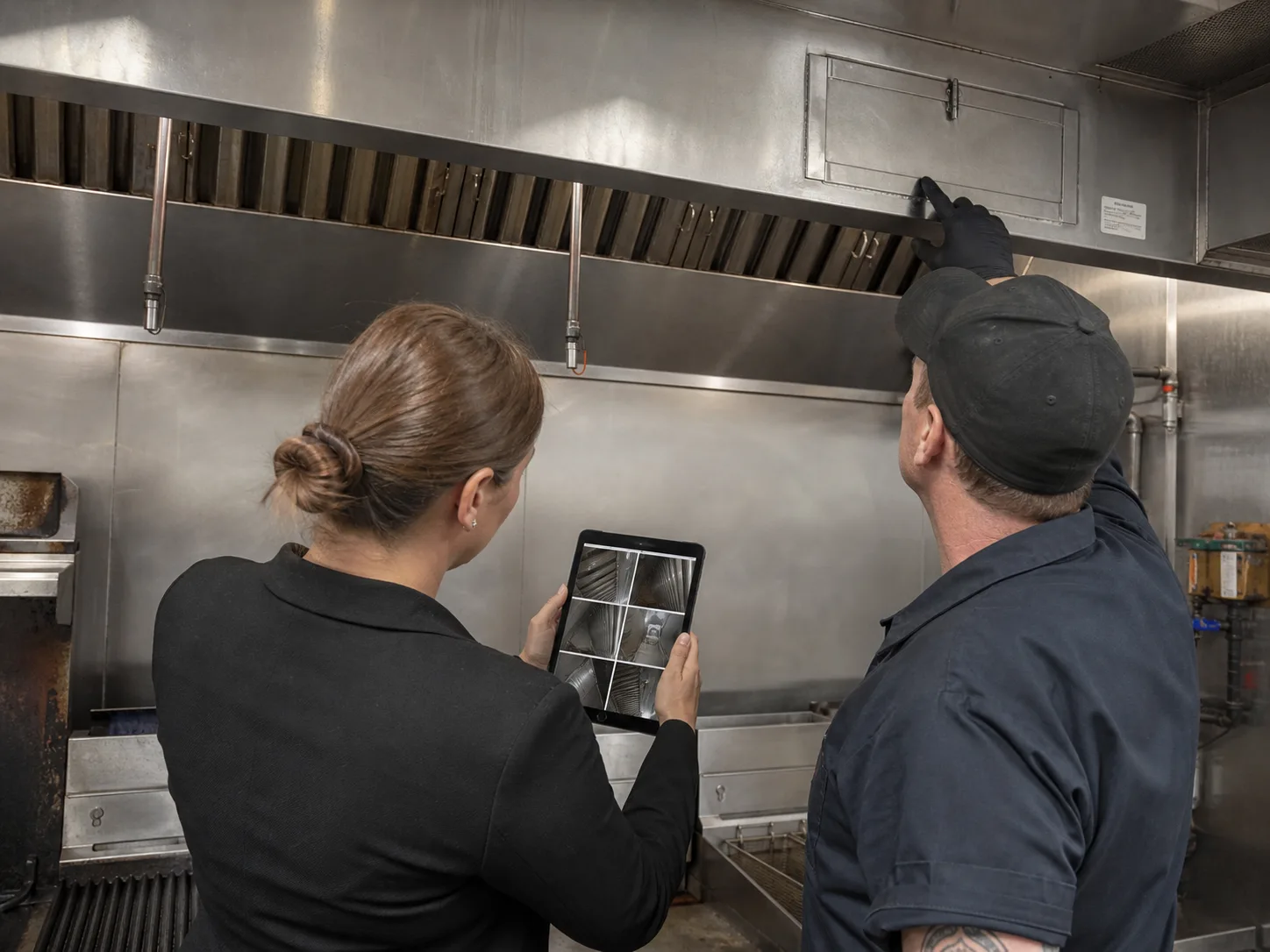
Documentation
Keep labels, photographs, service history and unresolved deficiencies tied to each system.
Explore this service →Port City operating context
Wet roofs, lightning and wind can change safe access to rooftop fans. North Carolina’s published exhaust inspection framework uses operation-based frequency categories, while the local fire official controls site-specific direction.
Useful details before the first visit
Map the roof route.Share ladders, hatches, keys, alarms and fan locations before the crew arrives.
Name the reopening deadline.Schedule protection, cleaning, cleanup and verification backward from service.
Keep one file per system.Photos and deficiencies are useful only when managers know which equipment they show.
Scope before price
| What you notice | Possible approach | What still needs inspection |
|---|---|---|
| Routine recurring service | Hood-to-fan cleaning | Buildup, access, fan and reporting |
| Grease at the fan or curb | Rooftop fan and containment scope | Hinge, wiring, roof and duct opening |
| Inspection deadline | Cleaning plus records review | Prior reports, labels and deficiencies |
| Several systems or difficult access | Walk-through and itemized estimate | System inventory, access and shutdown labor |
Planning comparison only. Cleaning does not replace fire-suppression, mechanical, electrical or official inspection work.
How requests work
Useful project details make it easier for an independent provider to confirm fit, timing and the next sensible step.
Share hood, duct and fan count, cooking load and access.
Confirm shutdown, roof access, alarms and reopening requirements.
Receive a component-based scope, photographs and separated deficiencies.
Prepare the project brief
Frequently asked questions
A complete proposal should identify the hood, plenum, accessible duct, exhaust fan, filters when included, protection, cleanup, service label and photographs.
Frequency follows fuel, cooking type, volume and grease accumulation. Published categories commonly range from monthly for solid fuel to annual for low-volume operations. Confirm local direction for the facility.
Yes. Wind, lightning and wet roofs can make rooftop access unsafe. A responsible plan includes a backup window rather than an unsafe shortcut.
A routine single system may plan around $350–$700, while multiple systems, heavy buildup or difficult access can exceed $800–$2,000. These are planning figures, not Wilmington bids.
Request commercial service
Share the kitchen, system facts and preferred shutdown window. An independent provider can confirm availability, scope and final price.